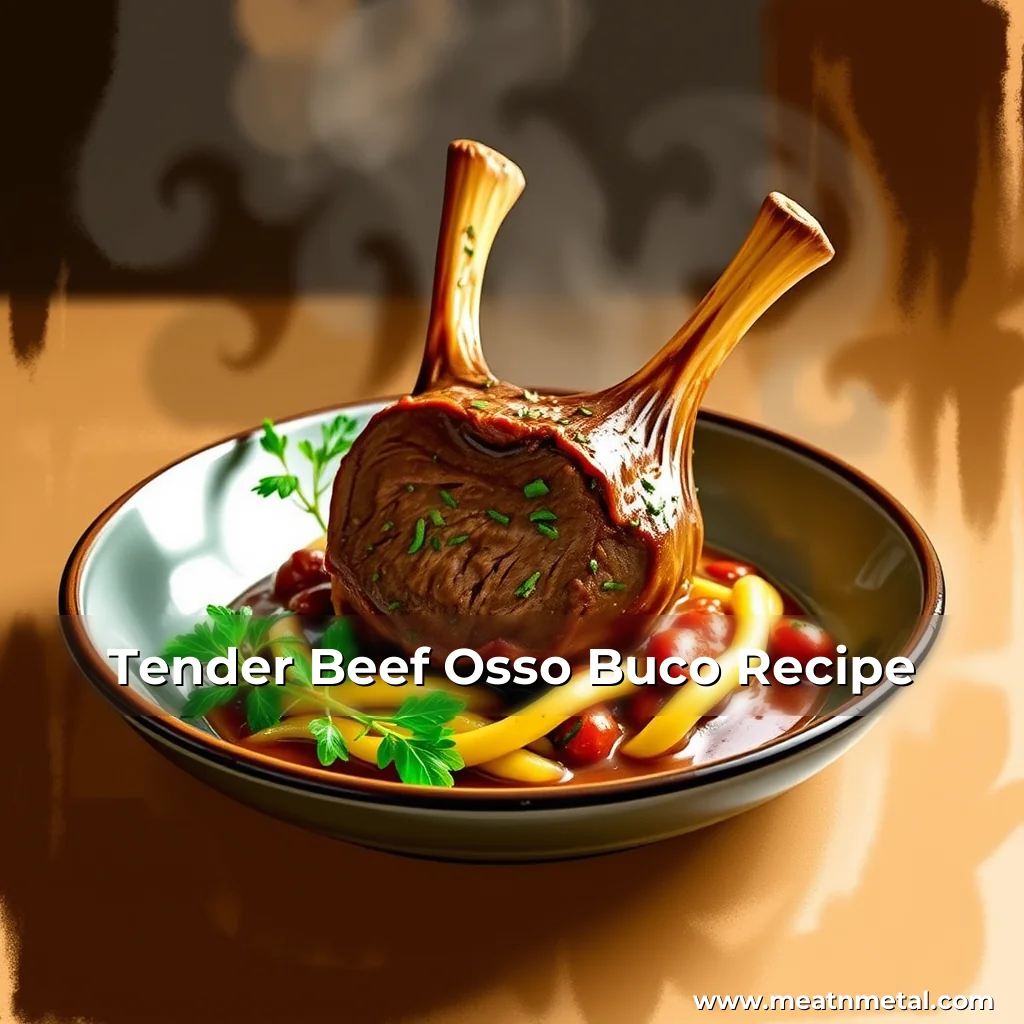
The Origins of Beef Osso Buco
Beef osso buco is a classic Italian dish that originated in the northern region of Italy, particularly in the Lombardy and Piedmont areas. The name “osso buco” literally translates to “hollow bone” in Italian, which refers to the braised short ribs that are the main ingredient of the dish.
A Brief History
The origins of beef osso buco date back to the 16th century, when it was served as a peasant dish in the northern regions of Italy. The dish was made with tougher cuts of meat, such as short ribs, which were slow-cooked in broth to make them tender and flavorful.
Introduction
Osso buco, a classic Italian dish, has been a staple of Italian cuisine for centuries. This traditional recipe, originating from Milan, is typically made with veal shanks, but this recipe takes a creative twist by using beef shanks instead. Beef shanks are a more affordable and accessible alternative to veal, making this dish more approachable for home cooks.
The Benefits of Using Beef Shanks
Introduction
The art of cooking beef shanks is a culinary journey that requires patience, attention to detail, and a willingness to experiment. Beef shanks, also known as beef osso buco, are a cut of beef that consists of the lower leg, typically from the cow’s shank or leg. This cut is often overlooked in favor of more tender cuts, but it offers a rich, unctuous flavor and a tender, fall-off-the-bone texture when cooked correctly.
The Benefits of Cooking Beef Shanks
Preparing the Beef Shanks
To prepare beef shanks for cooking, follow these steps:
Deglazing the Pan
Deglazing the pan is a crucial step in creating a rich, flavorful sauce. It involves adding a liquid to the pan to loosen and dissolve the browned bits of food that have accumulated on the bottom of the pot.
The citrus zest also adds a subtle sweetness to the dish.
The Origins of Gremolata
Gremolata is a traditional Italian condiment originating from the Veneto region.
Browned Bits and Wine Reduction
The browning process is a crucial step in developing the rich flavors of the dish. The Maillard reaction, a chemical reaction between amino acids and reducing sugars, occurs when the meat is browned, resulting in the formation of new flavor compounds. These compounds contribute to the depth and complexity of the dish.
Add 1/2 cup of water and 1 tablespoon of tomato paste to the saucepan. Stir in 1 teaspoon of dried oregano, 1/2 teaspoon of salt, and 1/4 teaspoon of black pepper. Bring the mixture to a boil, then reduce the heat to low and simmer for 10 minutes. Strain the sauce through a fine-mesh sieve into a clean bowl. Discard the solids.
Step 5: Add the meat and simmer. Add 1 pound of ground beef to the saucepan and cook until browned, breaking it up with a spoon as it cooks. Add 1 onion, diced, and 2 cloves of garlic, minced, to the saucepan and cook until the onion is translucent. Add 1 cup of beef broth and 1 tablespoon of tomato paste to the saucepan.
The key to a great osso buco is to cook the veal shanks low and slow, so they become tender and fall-off-the-bone.
Traditional Osso Buco with Veal Shanks
Osso buco is a classic Italian dish that originated in Milan. The name “osso buco” literally translates to “hollow bone,” which refers to the veal shanks used in the recipe. This traditional dish is a staple of Italian cuisine, and its rich flavors and tender meat make it a favorite among foodies.
The Importance of Cooking Time
The key to a great osso buco is to cook the veal shanks low and slow, so they become tender and fall-off-the-bone. This requires patience, as the dish needs to simmer for several hours to achieve the desired tenderness. However, the end result is well worth the wait.
The Role of Cooking Liquid
The cooking liquid plays a crucial role in the flavor and texture of the osso buco. A good cooking liquid should be rich and flavorful, with a balance of acidity and sweetness.
Reheat it in the frozen state, then add a little extra sauce if needed.
The Convenience of Freezing Beef Osso Buco
A Delicious and Versatile Dish
Beef osso buco, a classic Italian dish, is often associated with long cooking times and complicated preparation. However, this couldn’t be further from the truth. Freezing beef osso buco is a convenient and practical way to preserve its rich flavor and tender texture, making it an ideal option for busy home cooks and professional chefs alike.
The Benefits of Freezing
Preparing for Freezing
Before freezing, make sure to follow these steps:
Thawing and Reheating
The marrow is rich in nutrients and has been a staple in many cuisines around the world for centuries. It’s a delicacy that’s often overlooked in modern times, but its rich flavor and numerous health benefits make it a culinary treasure worth exploring.
The Nutritional Benefits of Bone Marrow
Rich in Protein and Minerals
Bone marrow is an excellent source of protein, containing about 20 grams per 3-ounce serving.
The Possibility of Slow Cooking Beef Osso Buco
Is it possible to cook beef osso buco in a slow cooker? Our recipe demonstrates that this dish is well-suited for slow cooking.
Understanding the Basics of Beef Osso Buco
Beef osso buco is a classic Italian dish that originated in Milan. The name “osso buco” literally translates to “hollow bone,” which refers to the braised veal shanks that are the centerpiece of the dish. However, our recipe uses beef instead of veal, making it a more accessible and affordable alternative.
The Benefits of Slow Cooking
Slow cooking is a great way to cook beef osso buco because it allows for tenderization of the meat and a rich, flavorful sauce. The low heat and moisture of the slow cooker break down the connective tissues in the meat, making it fall-apart tender.

news is a contributor at Meat N Metal. We are committed to providing well-researched, accurate, and valuable content to our readers.